Is It Better for an 83 Year Old Widow When Down Sizing to Buy Again or Rent
Do nosotros really live longer than our ancestors?
(Image credit:
BBC/Getty
)
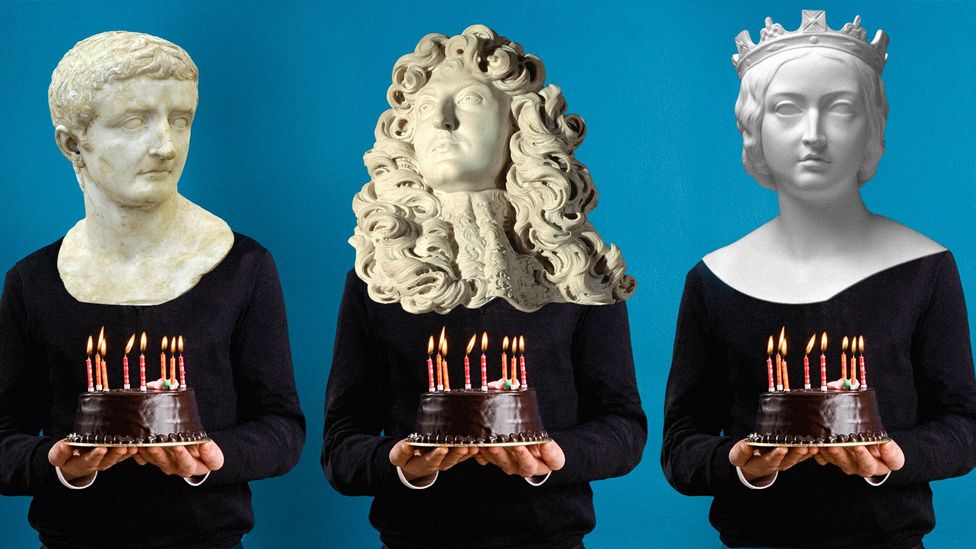
The wonders of modern medicine and nutrition make it like shooting fish in a barrel to believe we enjoy longer lives than at whatever time in human history, just we may non be that special afterward all.
O
Over the last few decades, life expectancy has increased dramatically around the globe. The boilerplate person born in 1960, the earliest year the United nations began keeping global information, could expect to live to 52.5 years of historic period. Today, the average is 72. In the UK, where records take been kept longer, this tendency is even greater. In 1841, a baby girl was expected to alive to merely 42 years of historic period, a male child to 40. In 2016, a baby girl could expect to attain 83; a boy, 79.
The natural determination is that both the miracles of modernistic medicine and public health initiatives have helped united states live longer than ever earlier – so much so that we may, in fact, be running out of innovations to extend life further. In September 2018, the Office for National Statistics confirmed that, in the UK at least, life expectancy has stopped increasing. Beyond the UK, these gains are slowing worldwide.
This belief that our species may have reached the elevation of longevity is also reinforced by some myths well-nigh our ancestors: it's common belief that ancient Greeks or Romans would take been flabbergasted to meet anyone to a higher place the age of 50 or sixty, for instance.
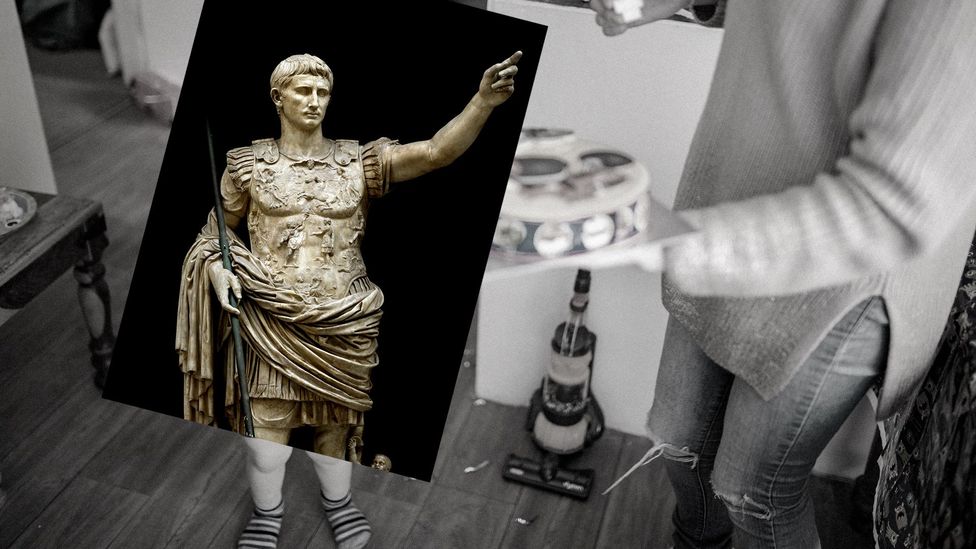
Rome'due south first emperor, Augustus, died at 75 – underscoring the distinction between our ancestors' average life expectancy versus their life span (Credit: BBC/Getty)
"There is a bones stardom between life expectancy and life span," says Stanford University historian Walter Scheidel, a leading scholar of ancient Roman demography. "The life bridge of humans – opposed to life expectancy, which is a statistical construct – hasn't actually changed much at all, equally far equally I can tell."
Life expectancy is an average. If you take two children, and one dies earlier their showtime birthday only the other lives to the age of lxx, their boilerplate life expectancy is 35.
That's mathematically correct – and information technology certainly tells the states something about the circumstances in which the children were raised. But information technology doesn't give united states the full motion picture. It as well becomes specially problematic when looking at eras, or in regions, where in that location are loftier levels of infant mortality. Virtually of human being history has been blighted by poor survival rates amongst children, and that continues in various countries today.
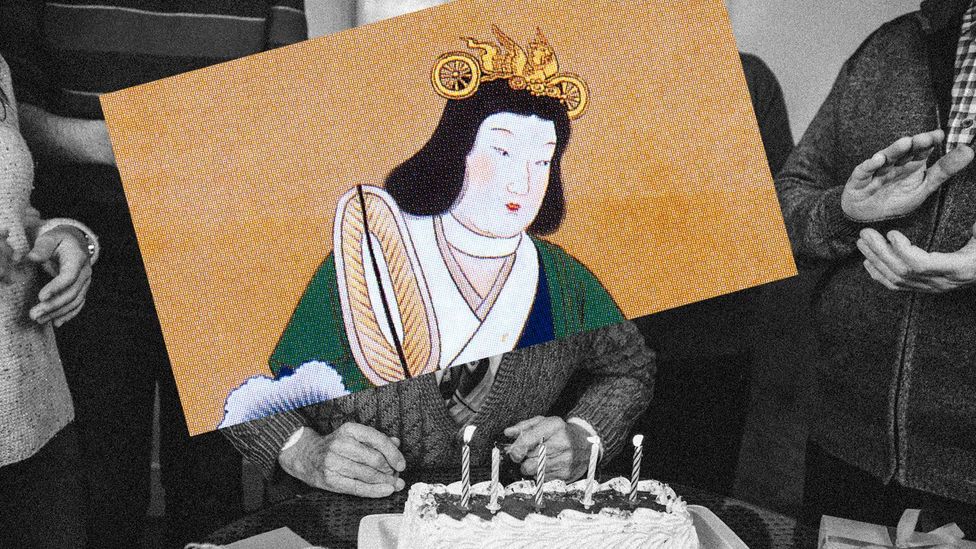
The 6th-Century ruler Empress Suiko, who was Japan's beginning reigning empress in recorded history, died at 74 years of age (Credit: BBC/Getty)
This averaging-out, however, is why it's commonly said that aboriginal Greeks and Romans, for case, lived to just xxx or 35. Only was that actually the case for people who survived the fragile menstruum of childhood, and did it mean that a 35-year-old was truly considered 'old'?
If 1'southward thirties were a decrepit old age, ancient writers and politicians don't seem to have got the message. In the early 7th Century BC, the Greek poet Hesiod wrote that a man should marry "when yous are non much less than 30, and not much more". Meanwhile, aboriginal Rome's 'cursus honorum' – the sequence of political offices that an ambitious boyfriend would undertake – didn't even allow a young human being to represent his first part, that of quaestor, until the age of xxx (nether Emperor Augustus, this was later lowered to 25; Augustus himself died at 75). To be delegate, you had to be 43 – eight years older than the US's minimum age limit of 35 to hold a presidency.
In the 1st Century, Pliny devoted an entire chapter of The Natural History to people who lived longest. Amongst them he lists the consul Yard Valerius Corvinos (100 years), Cicero's wife Terentia (103), a woman named Clodia (115 – and who had xv children forth the way), and the actress Lucceia who performed on stage at 100 years one-time.
Then there are tombstone inscriptions and grave epigrams, such as this one for a woman who died in Alexandria in the 3rd Century BC. "She was fourscore years sometime, just able to weave a delicate weft with the shrill shuttle", the epigram reads admiringly.
Not, however, that ageing was whatever easier then than information technology is now. "Nature has, in reality, bestowed no greater blessing on man than the shortness of life," Pliny remarks. "The senses go dull, the limbs torpid, the sight, the hearing, the legs, the teeth, and the organs of digestion, all of them die earlier usa…" He tin think of only one person, a musician who lived to 105, who had a pleasantly healthy old age. (Pliny himself reached barely half that; he'southward idea to have died from volcanic gases during the eruption of Mt Vesuvius, aged 56).
In the ancient world, at to the lowest degree, it seems people certainly were able to live just equally long every bit we do today. Simply merely how common was information technology?
Age of empires
Back in 1994 a report looked at every man entered into the Oxford Classical Dictionary who lived in ancient Greece or Rome. Their ages of death were compared to men listed in the more than recent Chambers Biographical Dictionary.
Of 397 ancients in total, 99 died violently by murder, suicide or in battle. Of the remaining 298, those born before 100BC lived to a median age of 72 years. Those born subsequently 100BC lived to a median age of 66. (The authors speculate that the prevalence of dangerous pb plumbing may have led to this credible shortening of life).
The median of those who died between 1850 and 1949? Lxx-1 years old – only one year less than their pre-100BC cohort.
Of grade, there were some obvious problems with this sample. One is that it was men-only. Another is that all of the men were illustrious enough to be remembered. All we tin can actually take abroad from this is that privileged, accomplished men have, on average, lived to about the same age throughout history – as long as they weren't killed first, that is.
Still, says Scheidel, that's not to be dismissed. "It implies in that location must have been non-famous people, who were much more numerous, who lived fifty-fifty longer," he says.
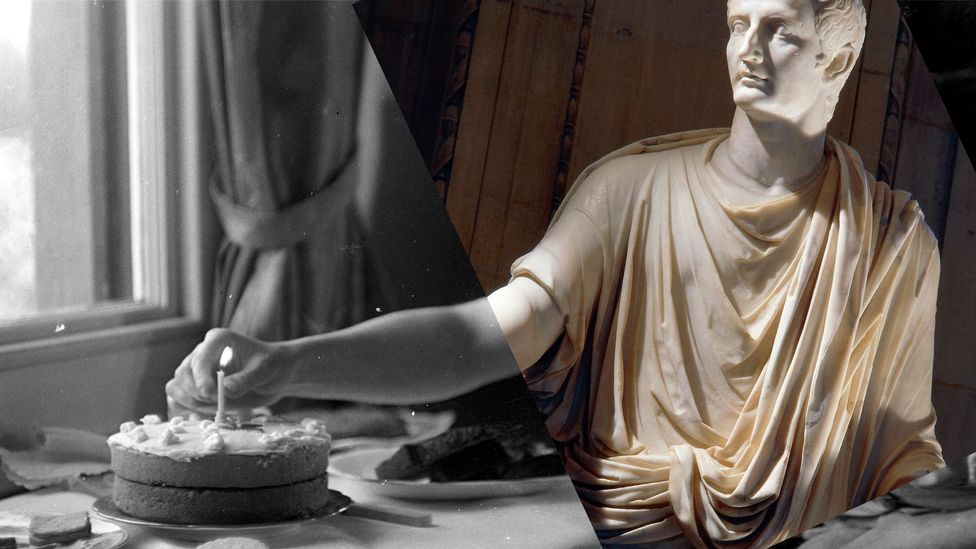
The Roman emperor Tiberius died at the age of 77 – some accounts say by murder (Credit: BBC/Getty)
Non everyone agrees. "There was an enormous difference betwixt the lifestyle of a poor versus an elite Roman," says Valentina Gazzaniga, a medical historian at Rome's La Sapienza Academy. "The conditions of life, access to medical therapies, even just hygiene – these were all certainly better amidst the elites."
In 2016, Gazzaniga published her research on more than than 2,000 ancient Roman skeletons, all working-class people who were buried in common graves. The average historic period of death was 30, and that wasn't a mere statistical quirk: a high number of the skeletons were effectually that historic period. Many showed the furnishings of trauma from hard labour, too as diseases we would associate with subsequently ages, like arthritis.
Men might have borne numerous injuries from transmission labour or military machine service. But women – who, it's worth noting, also did hard labour such every bit working in the fields – hardly got off easy. Throughout history, childbirth, often in poor aseptic weather, is just one reason why women were at detail run a risk during their fertile years. Fifty-fifty pregnancy itself was a danger.
"We know, for example, that existence meaning adversely affects your immune organisation, because y'all've basically got some other person growing inside you," says Jane Humphries, a historian at the University of Oxford. "Then you tend to be susceptible to other diseases. And then, for example, tuberculosis interacts with pregnancy in a very threatening manner. And tuberculosis was a disease that had higher female than male mortality."
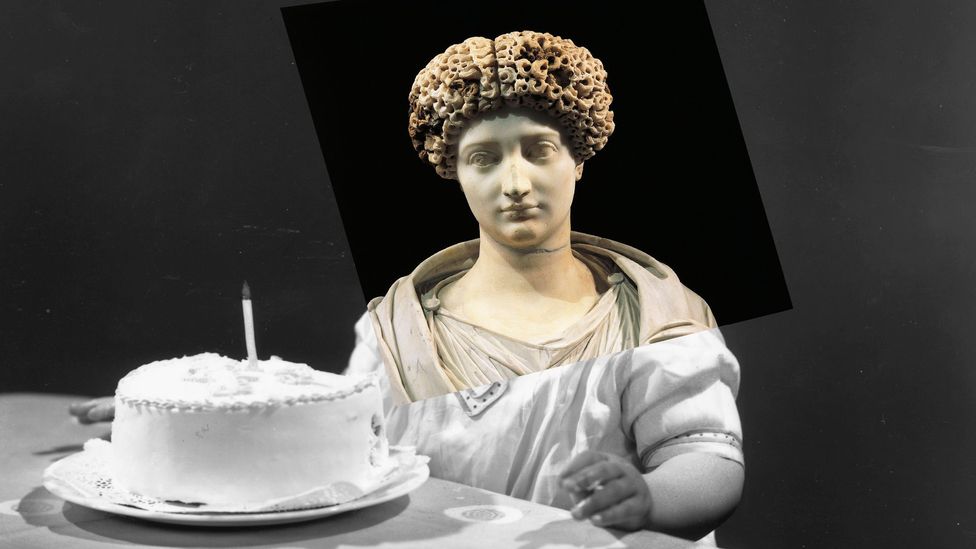
The Roman noble Julia the Elder died in the twelvemonth 14 at the age of 54, only virtually sources concord her death was the untimely event of exile and imprisonment (Credit: BBC/Getty)
Childbirth was worsened by other factors too. "Women oft were fed less than men," Gazzaniga says. That malnutrition means that immature girls often had incomplete development of pelvic basic, which and so increased the risk of difficult child labour.
"The life expectancy of Roman women actually increased with the decline of fertility," Gazzaniga says. "The more fertile the population is, the lower the female person life expectancy."
Missing people
The difficulty in knowing for sure simply how long our average predecessor lived, whether ancient or pre-celebrated, is the lack of data. When trying to determine average ages of death for ancient Romans, for case, anthropologists often rely on census returns from Roman Arab republic of egypt. But because these papyri were used to collect taxes, they ofttimes under-reported men – besides as left out many babies and women.
Tombstone inscriptions, left backside in their thousands by the Romans, are another obvious source. But infants were rarely placed in tombs, poor people couldn't afford them and families who died simultaneously, such as during an epidemic, also were left out.
And even if that weren't the case, at that place is another problem with relying on inscriptions.
"Yous demand to live in a earth where you have a certain amount of documentation where it can even be possible to tell if someone lived to 105 or 110, and that only started quite recently," Scheidel points out. "If someone actually lived to exist 111, that person might not have known."
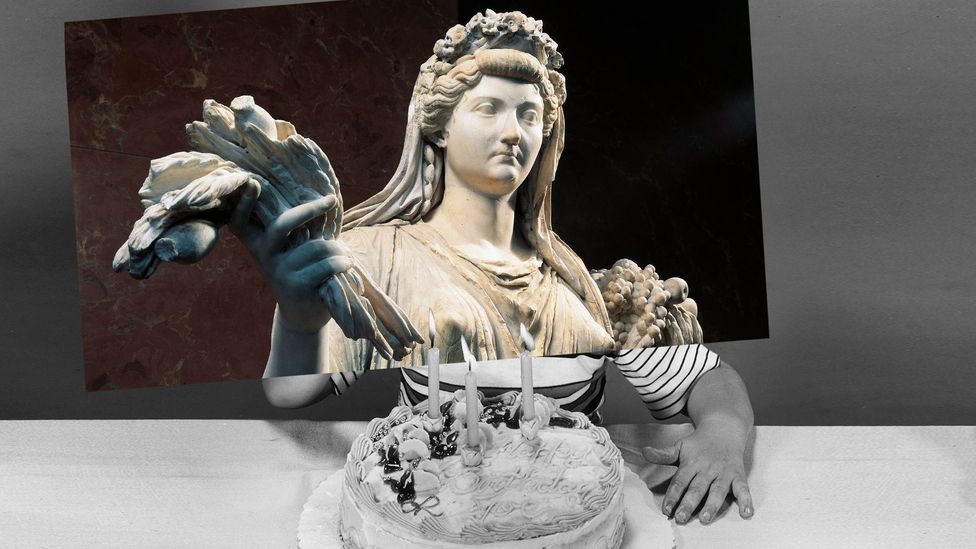
The Roman empress Livia, wife of Augustus, lived until she was 86 or 87 years old (Credit: BBC/Getty)
As a result, much of what we think we know well-nigh ancient Rome's statistical life expectancy comes from life expectancies in comparable societies. Those tell us that as many every bit one-third of infants died before the historic period of i, and half of children earlier age ten. After that age your chances got significantly better. If you made it to 60, y'all'd probably alive to be 70.
Taken birthday, life bridge in ancient Rome probably wasn't much unlike from today. It may have been slightly less "because you don't take this invasive medicine at end of life that prolongs life a little fleck, but non dramatically different", Scheidel says. "Y'all tin can accept extremely low average life expectancy, because of, say, significant women, and children who die, and however have people to alive to lxxx and 90 at the same fourth dimension. They are just less numerous at the stop of the twenty-four hour period because all of this attrition kicks in."
Of course, that attrition is not to exist sniffed at. Particularly if you lot were an infant, a woman of childbearing years or a hard labourer, you'd be far better off choosing to alive in year 2018 than 18. But that notwithstanding doesn't hateful our life span is actually getting significantly longer every bit a species.
On the record
The information gets amend later in human history once governments begin to keep careful records of births, marriages and deaths – at first, particularly of nobles.
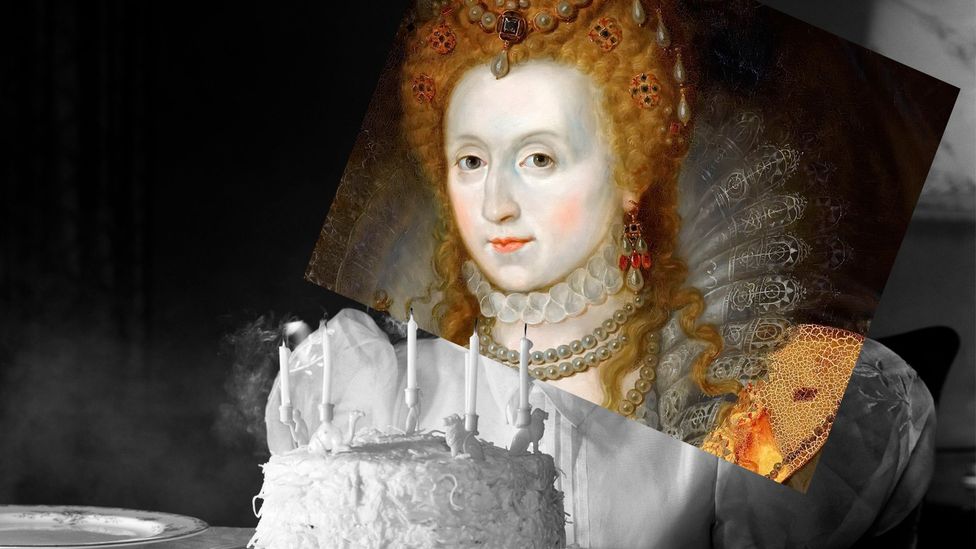
Queen Elizabeth I lived until the historic period of 70; life expectancy at the time could be longer for villagers than for royals (Credit: BBC/Getty)
Surely, by the soot-ridden era of Charles Dickens, life was unhealthy and short for nearly everyone? Nonetheless no. As researchers Judith Rowbotham, now at the University of Plymouth, and Paul Clayton, of Oxford Brookes University, write, "in one case the dangerous childhood years were passed… life expectancy in the mid-Victorian menstruation was not markedly unlike from what it is today". A v-year-old girl would live to 73; a boy, to 75.
Non simply are these numbers comparable to our own, they may be even ameliorate. Members of today'due south working-class (a more accurate comparison) live to around 72 years for men and 76 years for women.
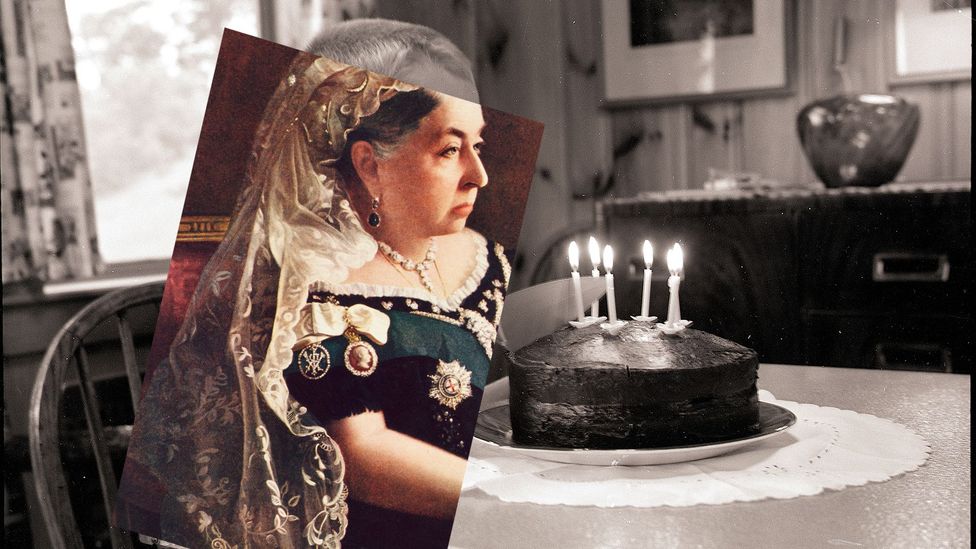
United kingdom of great britain and northern ireland's Queen Victoria died in 1901 at the age of 81. During her reign, a daughter could await to live to about 73 years of historic period, a boy to 75 (Credit: BBC/Getty)
"This relative lack of progress is striking, especially given the many environmental disadvantages during the mid-Victorian era and the country of medical care in an age when modern drugs, screening systems and surgical techniques were self-evidently unavailable," Rowbotham and Clayton write.
They argue that if nosotros recollect we're living longer than ever today, this is because our records go back to around 1900 – which they call a "misleading baseline", as it was at a time when nutrition had decreased and when many men started to smoke.
Pre-celebrated people
What about if we await in the other direction in fourth dimension – before whatsoever records at all were kept?
Although it is obviously difficult to collect this kind of data, anthropologists have tried to substitute past looking at today'southward hunter-gatherer groups, such as the Ache of Paraguay and Hadza of Tanzania. They found that while the probability of a newborn's survival to age 15 ranged between 55% for a Hadza boy upwards to 71% for an Anguish boy, once someone survived to that indicate, they could await to live until they were between 51 and 58 years one-time. Data from modern-day foragers, who accept no access to medicine or modernistic food, write Michael Gurven and Cristina Gomes, finds that "while at birth hateful life expectancies range from 30 to 37 years of life, women who survive to historic period 45 tin can expect to live an additional twenty to 22 years" – in other words, from 65 to 67 years old.
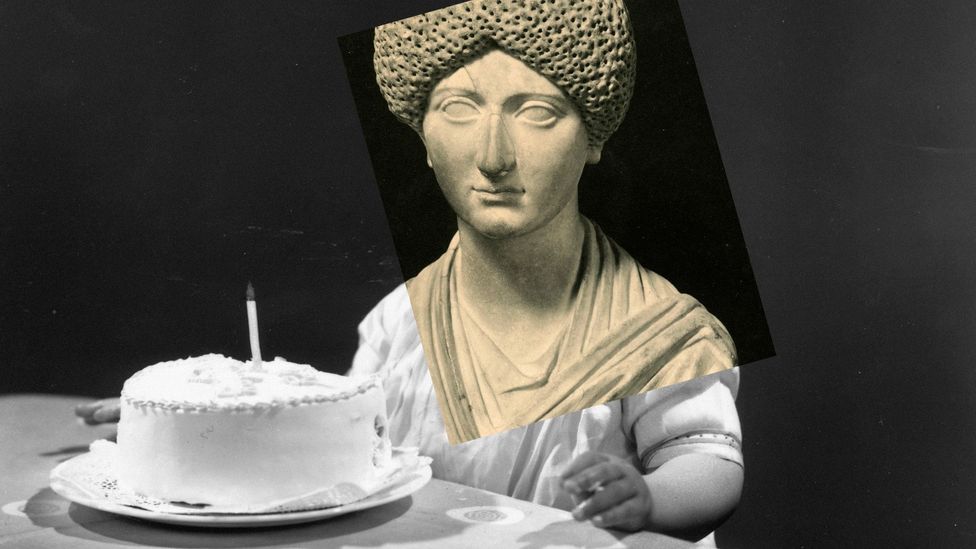
The Roman empress Domitia died in 130 at the age of 77 (Credit: BBC/Alamy)
Archaeologists Christine Cavern and Marc Oxenham of Australian National University have recently found the same. Looking at dental wear on the skeletons of Anglo-Saxons buried about one,500 years ago, they institute that of 174 skeletons, the majority belonged to people who were under 65 – but there as well were 16 people who died between 65 and 74 years old and 9 who reached at least 75 years of historic period.
Our maximum lifespan may not accept changed much, if at all. But that'due south not to delegitimise the boggling advances of the terminal few decades which have helped so many more than people reach that maximum lifespan, and live healthier lives overall.
Perhaps that'southward why, when asked what past era, if whatever, she'd prefer to alive in, Oxford's Humphries doesn't hesitate.
"Definitely today," she says. "I think women's lives in the past were pretty nasty and hardhearted – if not and then curt."
Amanda Ruggeri is BBC Time to come'due south senior editor. She can exist institute at @amanda_ruggeri on Twitter.
Join 900,000+ Future fans by liking us on Facebook , or follow u.s.a. on Twitter or Instagram .
If you liked this story, sign up for the weekly bbc.com features newsletter , called "If You Only Read 6 Things This Week". A handpicked selection of stories from BBC Future, Culture, Capital, and Travel, delivered to your inbox every Friday.
Source: https://www.bbc.com/future/article/20181002-how-long-did-ancient-people-live-life-span-versus-longevity

Post a Comment for "Is It Better for an 83 Year Old Widow When Down Sizing to Buy Again or Rent"