Say That Again Every Day Sounds and Hearing Loss
Overview
What is noise-induced hearing loss?
Noise-induced hearing loss (NIHL) occurs when structures in the inner ear become damaged due to loud noises. Well-nigh of the fourth dimension, the sounds in our everyday environment — like Television receiver, traffic and ambient conversations — are at a safe level. In that location are times, withal, when sounds go as well loud or last for too long. This tin atomic number 82 to noise-induced hearing loss. Unlike other types of hearing loss, NIHL is preventable.
Who is at take chances for noise-induced hearing loss?
People of all ages can develop noise-induced hearing loss. Individuals who attend loud concerts or mind to music through headphones at high volumes are more than susceptible to NIHL. Those who have jobs in noisy environments are besides specially vulnerable. According to the Centers for Disease Control (CDC), jobs and industries with the highest risk of noise-induced hearing loss include:
- Agriculture.
- Carpentry.
- Mining.
- Oil or gas extraction.
- Construction.
- Armed forces.
How common is racket-induced hearing loss?
Racket-induced hearing loss is mutual. According to research studies, NIHL affects approximately:
- v.2 1000000 children and teens between ages 6 to xix.
- 26 one thousand thousand adults betwixt the ages of 20 and 69.
What part of the ear is damaged in dissonance-induced hearing loss?
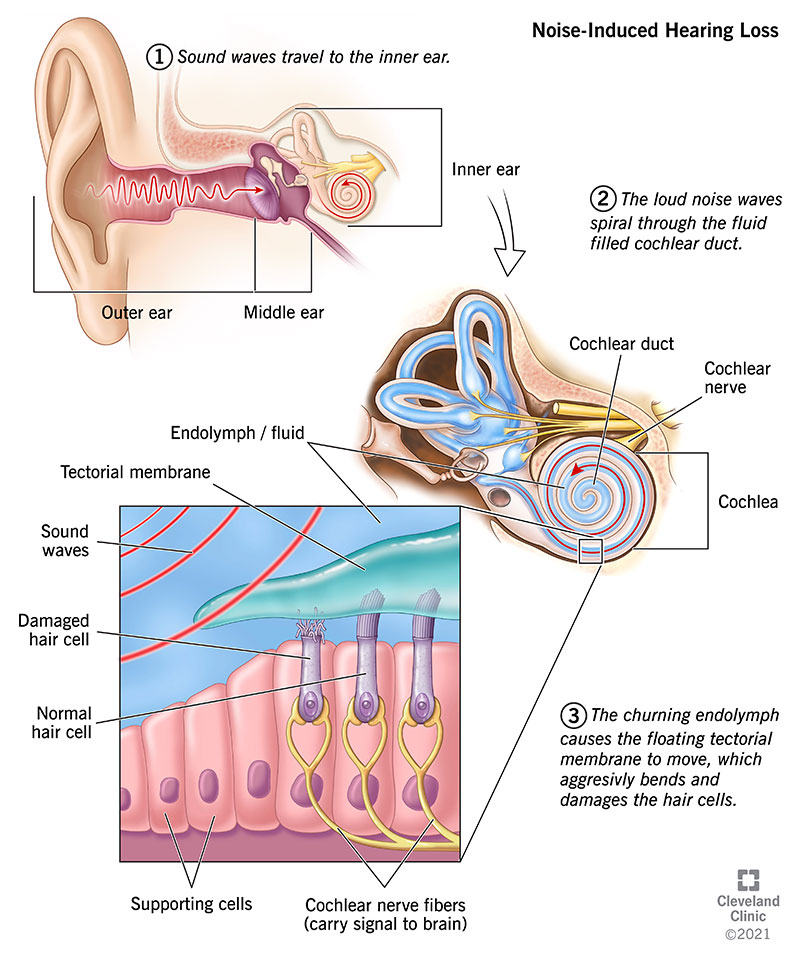
Loud noises primarily bear on the cochlea, an organ within the inner ear. When you're exposed to loud noises, cells and membranes in the cochlea can get damaged.
Symptoms and Causes
How do yous know if you have noise-induced hearing loss?
There are a few things that could hateful you're losing your hearing. Depending on the cause of your NIHL, symptoms may be immediate or yous may develop them over time. Some of the most common noise-inducing hearing loss symptoms include:
- Inability to hear high-pitched sounds, similar birds singing.
- Muffled or distorted spoken communication.
- Tinnitus (ringing or buzzing in the ear).
- A feeling of fullness or pressure in the ear.
Noise-induced hearing loss symptoms may final minutes, hours or days after noise exposure ends. Simply even if your hearing returns to normal, cells in the inner ear may still exist destroyed. If plenty salubrious cells are left, your hearing will eventually come back. But as more cells are destroyed over time, hearing loss can go permanent.
What causes noise-induced hearing loss?
NIHL occurs when the hair cells in your inner ear die. Once these hair cells are destroyed, they cannot grow dorsum.
Noise-induced hearing loss may be caused by a single event, such as a loud explosion or gunshot. This type of NIHL can exist immediate and permanent. In other instances, NIHL may be caused by exposure to loud noises over time. When this happens, you may get for weeks, months or even years before noticing symptoms, equally they oft occur gradually over time.
How long does it take noise-induced hearing loss to occur?
It depends. In some cases, a single exposure to loud noise tin can cause immediate hearing loss. In other cases, symptoms may accumulate over several years. Research suggests that significant noise-induced hearing loss usually develops after 10 or more years of exposure.
Diagnosis and Tests
How is noise-induced hearing loss diagnosed?
Your healthcare provider volition run auditory tests to determine if you have hearing loss. They'll besides inquire almost your symptoms.
Direction and Treatment
How is dissonance-induced hearing loss treated?
In virtually cases, noise-induced hearing loss is treated with hearing aids. Nevertheless, if hearing loss worsens over time, hearing aids may non provide enough do good and your provider may recommend other options such as cochlear implants.
Tin can racket-induced hearing loss be cured?
While NIHL can't be cured, there are treatments that can help meliorate your hearing. If yous think you have noise-induced hearing loss, schedule an engagement with your healthcare provider.
Prevention
Can I prevent dissonance-induced hearing loss?
Yeah. Noise-induced hearing loss tin be prevented by post-obit these guidelines:
- Empathise what types of noises can exist harmful to your hearing.
- Vesture earplugs or earmuffs when participating in loud activities.
- Avoid playing music at loud volumes.
- If you're unable to protect yourself from loud noise, move as far away from information technology as you can.
- Help young children protect their ears until they are old enough to do it themselves.
A enquiry study in Republic of austria found that it's possible to determine your susceptibility to NIHL by measuring temporary hearing loss — also known as temporary threshold shift (TTS). This examination can tell you how quickly the cells in your inner ear recover after racket exposure, which tin can be beneficial for preventing NIHL.
Outlook / Prognosis
What can I expect if I have noise-induced hearing loss?
If you've been diagnosed with noise-induced hearing loss, start protecting your ears now. While you tin can't opposite damage that has already been washed, you can reduce your risk for futurity damage.
Living With
When should I see my healthcare provider?
If y'all find any changes in your hearing, you should schedule a consultation with your healthcare provider. This is especially truthful if y'all experience sudden or rapidly progressing hearing loss.
Frequently Asked Questions
Are at that place other harmful effects regarding noise disturbance?
Yes. Hearing loss can severely impact your quality of life. In add-on to damaging your hearing, harmful noise has been linked to:
- Anxiety.
- Stress.
- High claret pressure (hypertension).
- Insomnia.
- Increased center rate.
- Isolation.
- Depression.
A notation from Cleveland Clinic
Noise-induced hearing loss tin can accept a significant negative impact on your quality of life. Y'all may have difficulty post-obit conversation or communicating with friends and family. This can ultimately lead to an avoidance of social situations. Fortunately, dissonance-induced hearing loss can often exist successfully managed with hearing aids or implants.
Source: https://my.clevelandclinic.org/health/diseases/21776-noise-induced-hearing-loss-nihl
Post a Comment for "Say That Again Every Day Sounds and Hearing Loss"